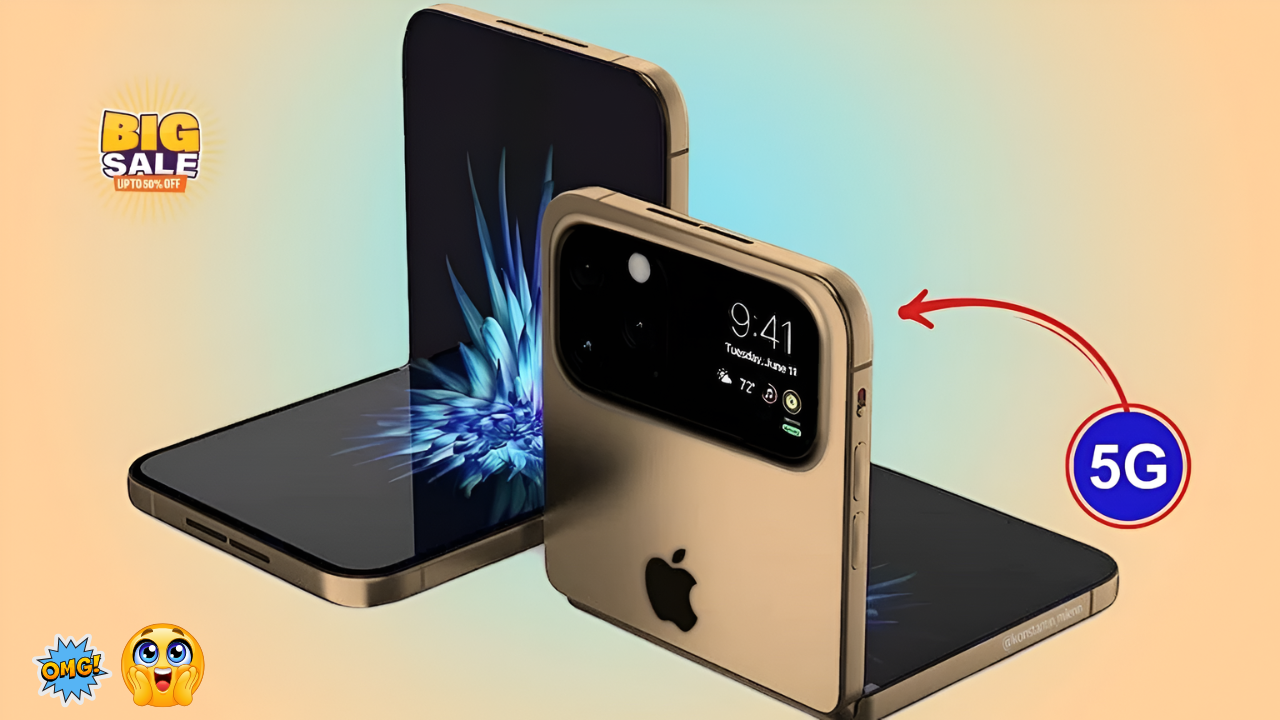
Apple is preparing to enter the foldable smartphone segment with the much-anticipated iPhone Flip. This move marks a significant shift in Apple’s strategy as it competes with foldable devices from Samsung, Oppo, and other tech giants. The iPhone Flip has the potential to redefine how consumers perceive foldable technology in their daily lives.
The Rise of Foldable Smartphones
Foldable phones have transitioned from futuristic concepts to practical devices. Samsung’s Galaxy Z Flip and Z Fold series have set industry benchmarks by offering flexibility, compact designs, and multitasking capabilities that traditional smartphones cannot match. Many users have been waiting for Apple to enter this segment, as the company’s launch often validates and boosts emerging technology.

Why the iPhone Flip Matters
The iPhone Flip could be Apple’s most significant innovation since the first iPhone in 2007. Expected to combine Apple’s signature design, performance, and ecosystem integration, it promises a polished user experience. Apple’s approach ensures that the device will deliver high-quality performance and reliability when it finally arrives.

Expected Features and Design
Leaks suggest a clamshell-style design, similar to Samsung Galaxy Z Flip, allowing the phone to fold vertically for portability. Apple is rumored to use advanced hinge technology to ensure durability and seamless folding. The display may feature OLED panels with ProMotion technology, offering smooth visuals. Premium materials such as ceramic or titanium may be used for strength and luxury. Additional features could include MagSafe, 5G connectivity, and under-display Face ID.

Performance and Software
The iPhone Flip is expected to run on the latest iOS optimized for foldable functionality, with features like multitasking layouts and adaptive display controls. It may be powered by the next-generation A-series chip for speed and efficiency. A split-battery design is likely to maintain long battery life.

Competition and Market Impact
Apple’s entry into the foldable market could intensify competition with Samsung, Oppo, Huawei, and Motorola. Its ecosystem integration with iCloud, AirDrop, MacBooks, iPads, and Apple Watches gives the iPhone Flip a potential edge in user experience.

Price and Launch
The iPhone Flip is expected to be a premium device, priced around $1,500 to $2,000 depending on storage options. The official launch may coincide with Apple’s annual September event next year.
Conclusion
The iPhone Flip signals the future of foldable technology, combining style, practicality, and Apple’s ecosystem. While pricing and durability remain speculative, the device has already generated excitement and could redefine the foldable smartphone segment.
