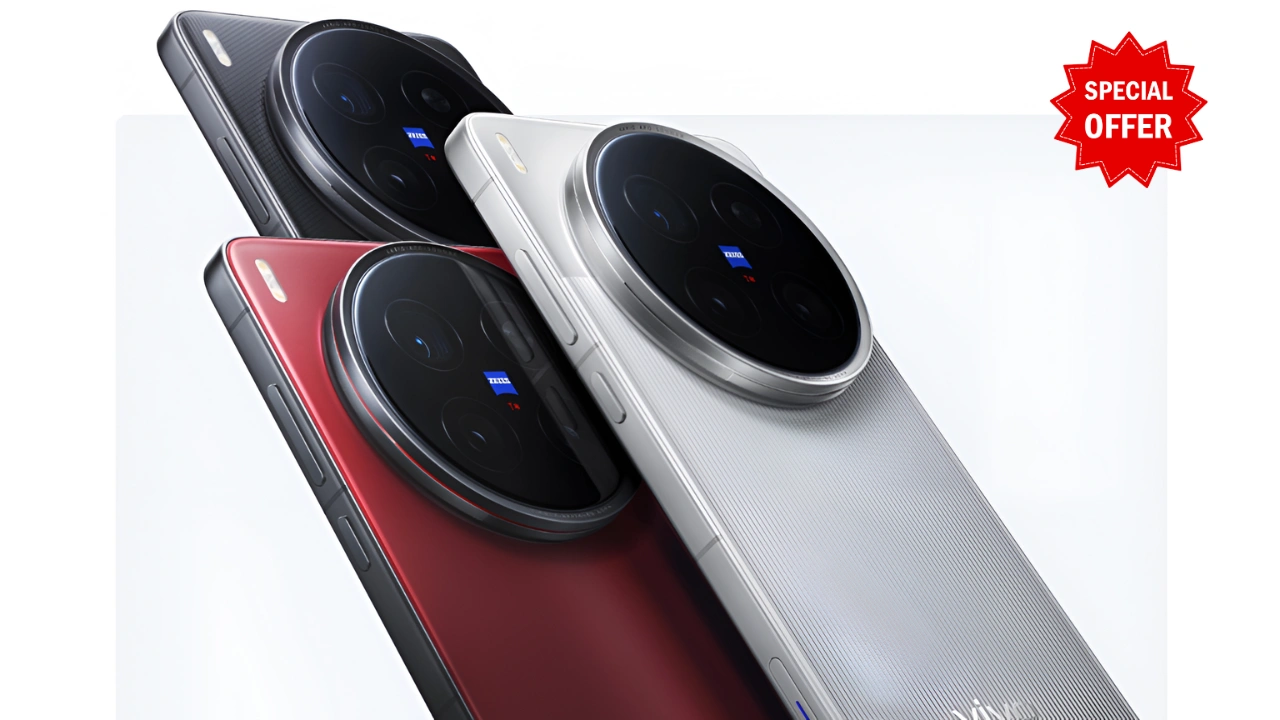
Vivo is gearing up to launch its X300 series, promising major upgrades in performance, cameras, and connectivity. Positioned as a competitor to Apple’s iPhone 17, the X300 Pro and its smaller sibling are designed to appeal to users looking for high-end Android features combined with seamless file sharing across devices.
Sleek Design and Powerful Performance
The X300 Pro will run on Android 16 with OriginOS 6, powered by MediaTek’s Dimensity 9500 chipset. Vivo is positioning this as its flagship model, with a sleek design and enhanced hardware. For users who prefer portability, the smaller X300 offers a compact footprint without compromising on performance. Both models emphasize refined aesthetics and premium build quality, catering to consumers seeking flagship-level Android devices.

AirDrop-Style File Sharing with Apple Devices
A standout feature of the X300 series is its OriginOS 6 file-sharing tool, similar to Apple’s AirDrop. This feature allows users to wirelessly transfer files between Vivo phones and Apple products like Macs and iPads. Users only need to be logged into their Vivo accounts on both devices—no cables or shared Wi-Fi required. While still rooted in Vivo’s ecosystem, this function bridges Android and iOS, offering a practical solution for users who work across platforms.

Advanced Camera Systems
The X300 Pro is expected to sport a Hasselblad-tuned quad-camera setup, enhancing photography with better color reproduction and professional-level features. Vivo has refined the rear camera design to deliver both style and functionality.

Expanding the Ecosystem
Other upcoming Vivo models, including the iQOO 15 with Snapdragon 8 Elite 2, will also adopt OriginOS 6 and the AirDrop-style sharing feature. Vivo aims not just to improve performance and camera capabilities but to break down ecosystem barriers, making cross-platform workflows easier for users juggling Android phones and Apple devices.

The Vivo X300 series signals a new direction for Android, combining flagship hardware with features that directly address one of iOS’s strongest advantages: seamless device interoperability.